Can you spot this amazing creature featured on the Woodland Trust site as one of ten strange creatures?
Known as a Water Bear or Moss Piglet this eight-legged creature can survive in outer space! They feed on small insects and can grow up to 1.5mm in length. Amazingly they always have the same number of cells in their bodies meaning that their cells just get bigger as they grow rather than dividing to increase in size.
Look for them in damp places, stone walls where there are mosses and lichens.
This week is National Insect Week so perhaps we should get outside and start looking for some insects.
There is absolutely loads of information at THIS site including videos, discovery pages, free booklet/magazine and so much more so why not take a look?
How about seeing how many ladybirds you can find? This sheet will help.
And finally why not make an insect home?
These are a few in my garden but THIS * site has some great instructions on how you can make your own.
They existed on this plant before the times of the dinosaurs and have merged into human folklore and mysticism over time.
Science now tells us that trees are sociable, live in families and have ways to communicate and protect each other.
They can be ancient living for over a thousand years. They change with the seasons, provide food, are homes for many creatures and are one of our most valuable industrial resources.
They are critical to the planet, they take carbon dioxide and give out oxygen keeping the planet healthy.
The Forest School and wider grounds have many trees connecting us with past uses of the site. The oldest trees are about 200 years old and remind us of the time they stood in the grounds of Gilbertstone House which stretched all the way down to where Birmingham International Airport currently can be found. Others tell of when the school was opened or the school eco days and more recently planting of saplings from the Woodland Trust.
So why not begin to find out about the history of the trees in your garden or local street or park.
To find out how old a tree is you can count the rings but this has the problem of having to cut the tree down.
There is an easier way fortunately. All you need is a long piece of string and a tape measure or if you have one a flexible tape measure.
Measure around the tree trunk about 1.4m above the ground. Next decide where your tree is. If in a wooded area divide your number by 1.25. If it is in open space divide by 2.5. the answer gives you an approximate age for the tree. So if you find a tree in open space and the measurement round the trunk is 350 cm 350÷2.5=140 years old. See here for help sheet Why not make a timeline for your tree can you find key historical events that have happened during the life of your tree. Was it in your garden when your house was built? Did it see the first person walk on the moon? Was it alive in the time of Queen Victoria? If you want help to identify what type of tree you are looking at see this sheet or this poster. Please note this activity is for deciduous trees - those that lose their leaves in winter. Acknowledgements: The Hidden Life of Trees by Peter Wohlleben, Tree from seed to mighty forest David Burnie, Photos from Walking in Paradise Photography.
Spending time outdoors is fun. We all appreciate a little bit of sunshine, a warm breeze, hearing birdsong or a refreshing summer rain. But learning a little about nature also helps to connect us to our surroundings and to feel a part of our wider world.
Research is also revealing to us the health benefits of being out in nature through things like a simple walk, forest bathing or quiet moments of mindfulness.
Whatever your motivation for spending time outdoors there are plenty of places to find encouragement and ideas.
Here is the first organisation and links to their materials to help you along your way.
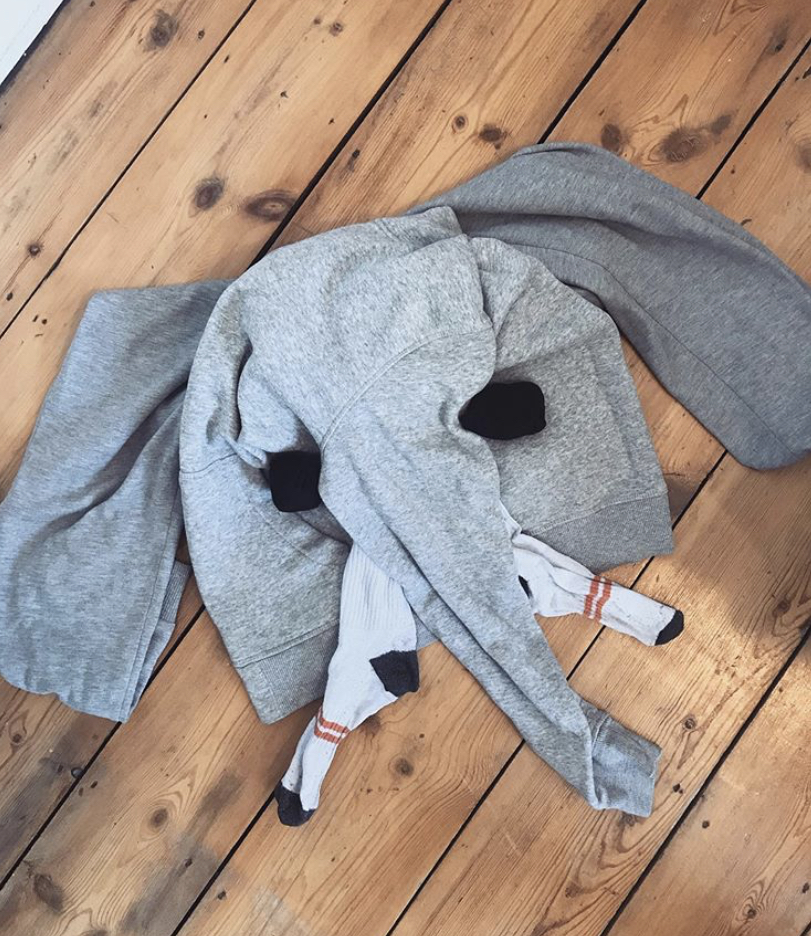
The Wild Network website has many ideas including a weekly set of challenges which can be done either in or outdoors. I particularly like their animal clothes challenge. What animal can you make your clothes into? Here's an idea:-
They also have walking bingo cards, a different one each week and a free film which introduces how the wild network was started.
The challenge I've taken is to build an obstacle course for a wild animal.
Over time quite a few creatures have visited our garden, i'll share them in future posts, but a the moment we have a couple of squirrels that come each morning.
Now these squirrels aren't very bright. To stop them taking the bird food I put up a nut feeder just for them with a lid.
What did they do? They ate it! Don't believe me? Here's the evidence or what's left of it.
So without any high hopes I decided to build a squirrel run. The plan was for them to run along the top of the fence, along a rope to the first tray of nuts. Then along the rope and onto the arch to a basket with more nuts suspended from the arch.
Needless to say it didn't work out like this so the run was adapted and here is a short video to show you how it all went.
An adaptation of the run is under construction. The magpie ate all the nuts in the tray and then the squirrel discovered running up the stick.
If you feel inspired it would be great to hear how you got on. Have fun😃
Here is some inspiration to get you thinking about gymnastics.
The poem is called Gymnastics by Michael Rosen and can be found in his book
Quick, Let's Get Out Of Here.
In Forest School we do a gymnastics based activity with Year 3 called Theseus and the Minotaur linked to their Greek project.
In small groups the children make a gymnastic type obstacle to either go over, under or to balance upon. We also focus on Health and Safety to ensure these are safe to use. Each obstacle is then added together to make a labryinth for the children to escape the Minotaur.
Here are some example pictures of the work they completed earlier in the year.
So your challenge is simple. Can you make a gymnastics course either indoors or outdoors?
You could use things like popup tunnels or large cardboard boxes if you have them. Why not balance on a brick? Put down two sticks to represent the banks of a stream and see if you can jump across. I'm sure you have lots of ideas and we'd love to see your photos.
Remember to stay safe and get things checked out by an adult.
By the way Gnorman has gone missing again. Can you find him in the pictures above. He appears four times. Remember to click on the photo to see a larger image.
Gnorman tells me it's been awfully quiet in Forest School for some time now. He wonders where everyone has gone and why no one tries to find him anymore. I've tried to explain but he doesn't really get it.
He says all Harrold wants to do is push his wheelbarrow about and that's just no fun.
So I suggested we could play 'Where's Gnorman?' online. All Gnorman has to do is go and hide. I'll take a photo and we'll post to see if anyone can spot him in the photo.
He thinks this is a great idea and looks very much to hearing from you all.
Watch future posts and see if you can find Gnorman in the photo.
By the way he tells me someone has been creeping into Forest School and is feeding the birds so that's good. Hopefully they will be nesting now with lots of young ones to come over the rest of the Springtime.
Children and nature go together—or should. Recent studies document the importance of introducing children to the natural world, beginning in the early years. Their social, emotional, and physical health depends on this exposure to develop. Humans are hardwired to need nature—because we are part of it. In some communities, children lack access to nature and the freedom to explore local flora and fauna. How can children care about nature if they haven’t experienced it firsthand? Adults must do what they can to ensure that children have those opportunities. 1
This morning in assembly we introduced The Wildlife Trust's 30 Days Wild.
Every session in Forest School will include a fun activity linked to the Random Acts of Wildness.
We are also encouraging children to contribute their own activities on a diary page available from the office or via the eSchools learning platform.
Children can get involved in any way they want from their back garden, local park but some may want to get more involved and can sign up here (with parental permission)
Every child will also receive a link to a Survey Monkey questionnaire via eSchools to find out how wild we are as a school.
But most of all we just want to to enjoy being outdoors.
Follow us on Twitter to find out what we are getting up to and more ideas of what you can do.